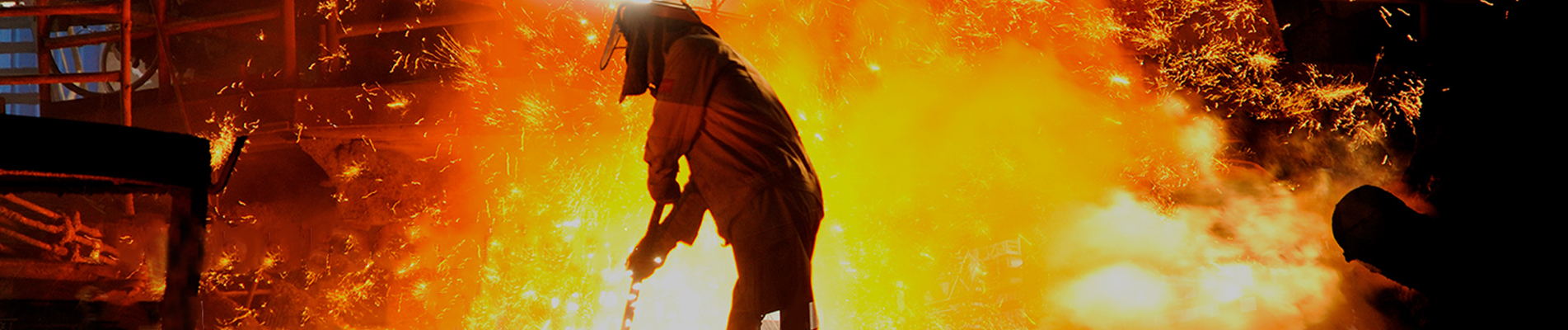
For an industrial buyer, the most important questions are therefore not simply "What temperature can this fabric withstand?" or "Which roll is the heaviest?"
A correct specification should define the material, hot-work exposure, fabric weight, thickness, coating or surface treatment, usable roll width, roll length and downstream fabrication requirements.
BSTFLEX supplies Welding Blanket Rolls & Roll Goods for distributors, welding safety brands, converters, industrial fabricators and OEM buyers that manufacture welding blankets, curtains, barriers and other hot-work protection products.
| Requirement | Material to Evaluate First | Why |
|---|---|---|
| Economical general spark protection | Heat-cleaned fiberglass | Flexible uncoated fiberglass for routine welding protection and conversion |
| Better handling and abrasion durability | Acrylic coated fiberglass | Coated surface improves fabric stability during repeated fabrication and use |
| More demanding sparks, spatter and hot-work exposure | Vermiculite coated fiberglass | Mineral-treated surface with heavier constructions available |
| Repeated handling and moisture exposure | Silicone coated fiberglass | Durable elastomeric surface with different handling characteristics |
| Higher-temperature textile requirement | Silica fabric | Higher thermal capability than conventional fiberglass constructions |
| Strong radiant heat | Aluminized fiberglass | Reflective metallic surface is designed to reduce radiant heat absorption |
| Soft coverage around irregular components | Carbon fiber felt | Nonwoven structure conforms more easily around pipes and complex shapes |
This table is a starting point. The actual welding or cutting process, blanket orientation, contact duration and protected equipment must still be considered before material approval.
A welding blanket roll is heat-resistant textile material supplied in a continuous length rather than as a finished blanket.
Depending on the material, roll goods can be converted into:
The buyer controls the final cutting and fabrication unless these operations are ordered from the supplier.
This makes roll goods particularly attractive to industrial textile converters, welding blanket manufacturers, safety-product distributors and companies producing several finished sizes from the same material.
| Specification | Welding Blanket Roll | Finished Welding Blanket |
|---|---|---|
| Supply Form | Continuous fabric | Completed protective product |
| Dimension to Specify | Usable roll width × roll length | Finished width × finished length |
| Edges | Normally unfinished | Can be hemmed or reinforced |
| Grommets | Normally not included | Optional according to design |
| Cutting | Performed by converter or supplier if ordered | Already cut to agreed dimensions |
| Best Buyer | Fabricator, converter, distributor, OEM | End user, project buyer or finished-product distributor |
Buyers deciding between these two formats can also review the BSTFLEX guide covering welding blanket rolls versus pre-sized welding blankets.
Material selection should begin with the hazard, not with the product name.
A welding blanket may be exposed to:
These conditions are not equivalent.
A lightweight fabric hanging vertically beside a welding station may perform satisfactorily because hot particles strike the surface and fall away quickly.
The same fabric placed horizontally below cutting work can experience a more severe condition because hot particles remain on the material and concentrate heat in one area.
Vertical curtains and barriers primarily need sufficient spark resistance, hanging strength and flexibility.
Because many particles leave the surface quickly, some lighter fiberglass constructions can be practical for these applications.
A horizontal welding blanket can experience longer contact from sparks, spatter and slag.
Buyers should give greater attention to:
When material is wrapped around a pipe, component or irregular piece of machinery, conformability becomes important.
Very heavy woven materials may be less convenient around complex geometry, while softer structures such as carbon felt can be useful for localized protection.
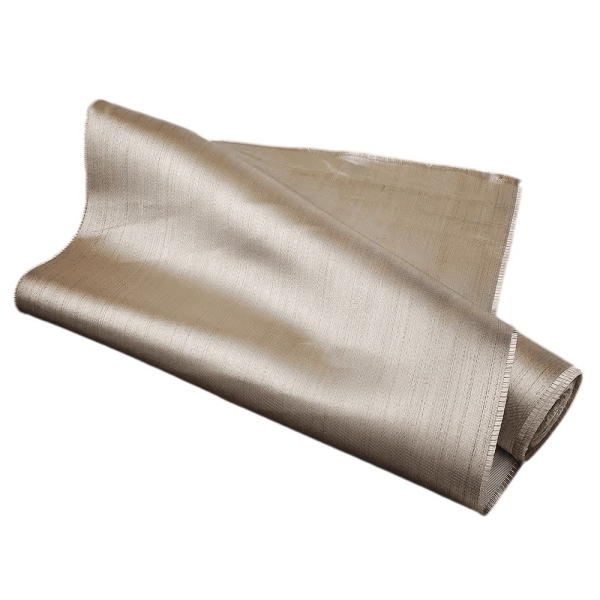
Heat-cleaned fiberglass is the logical starting point for economical general welding protection.
BSTFLEX Heat Cleaned Fiberglass Welding Blanket Roll uses an uncoated woven fiberglass construction intended for subsequent cutting, sewing and conversion.
Current BSTFLEX roll formats include approximately:
Typical existing heat-cleaned construction is approximately 0.43 mm thick, although the exact material specification should be confirmed before production.
Choose heat-cleaned fiberglass when the priorities are:
It should not automatically be selected for severe slag accumulation simply because the fiberglass itself is heat resistant.
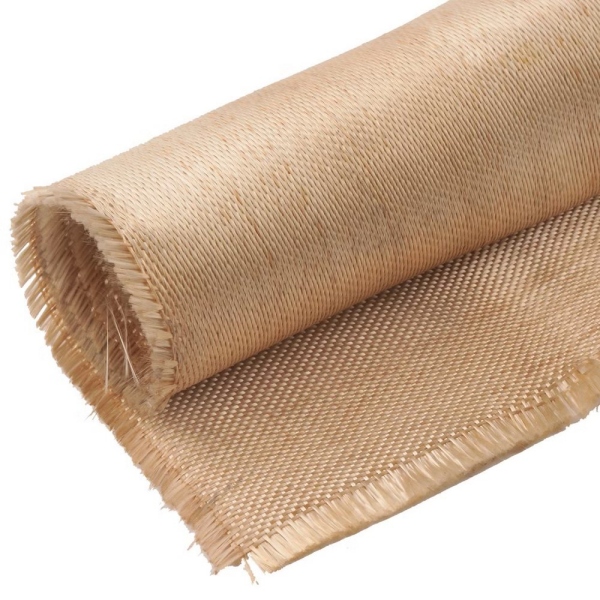
Acrylic coated fiberglass uses the same basic fiberglass textile concept but adds a surface treatment to improve handling characteristics.
BSTFLEX Acrylic Coated Fiberglass Welding Blanket Roll is currently available in several constructions, including approximately:
| Typical Thickness | Typical Positioning |
|---|---|
| 0.45 mm | Lightweight spark and vertical protection |
| 0.80 mm | General welding, sparks and spatter |
| 0.90 mm | Heavier texturized fiberglass construction |
Available roll widths vary by construction and can include approximately 1.0 m, 1.5 m and 1.8 m, with typical roll lengths around 45 or 50 m.
Acrylic coated fiberglass should be considered when the buyer wants:
Vermiculite coating is fundamentally different from acrylic or silicone treatment.
It is a mineral-based surface treatment intended for more demanding thermal and hot-work conditions.
BSTFLEX Vermiculite Coated Fiberglass Welding Blanket Roll is currently available in several weight and thickness combinations.
| Approx. Weight | Approx. Thickness |
|---|---|
| 615 g/m² | 0.8 mm |
| 816 g/m² | 1.0 mm |
| 1020 g/m² | 1.5 mm |
| 1380 g/m² | 2.0 mm |
| 1680 g/m² | 2.5 mm |
| 1900 g/m² | 3.0 mm |
The current construction is typically supplied around 100 cm / 40 in wide and approximately 50 m / 54.7 yd per roll.
Its specified working capability is up to approximately 815°C / 1500°F depending on the actual exposure and operating conditions.
Consider vermiculite treated fiberglass when:
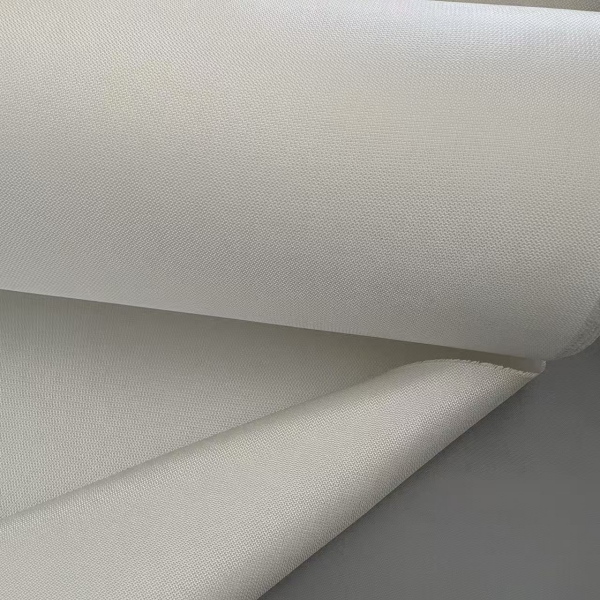
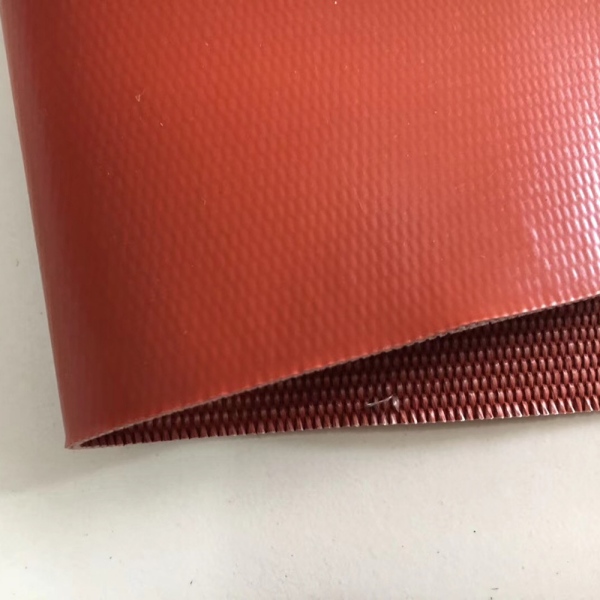
Silicone coated fiberglass uses an elastomeric surface rather than an acrylic or mineral treatment.
The coating can improve:
BSTFLEX currently offers finished Silicone Coated Fiberglass Welding Blankets, while selected silicone coated fiberglass constructions can also be supplied in roll form through the Welding Blanket Rolls & Roll Goods program.
One important specification rule applies:
Do not automatically use the temperature capability of the fiberglass fiber as the continuous working temperature of the silicone-coated composite.
The base textile and coating should be considered separately.
Silica should be evaluated when the thermal requirement moves beyond conventional fiberglass constructions.
BSTFLEX currently manufactures Silica Fabric Welding Blankets using 70% and 96% silica cloth.
Existing finished blanket constructions include approximately:
Roll material can be discussed through the welding blanket roll program according to silica grade, fabric weight, thickness and required width.
Silica should be considered when:
Silica percentage still matters. A buyer should not specify only "silica roll" without identifying the grade or actual thermal requirement.
Silicone coated silica combines a higher-temperature silica substrate with a coated surface.
BSTFLEX offers a Silicone Coated Silica Welding Blanket for demanding industrial applications.
This material family should be considered where high-temperature textile performance must be combined with a more durable surface.
However, buyers should still ask separately for:
A high silica temperature rating does not automatically become the continuous service rating of the coating.
Aluminized fiberglass is primarily a radiant heat solution.
BSTFLEX Aluminized Fiberglass Welding Blanket combines a reflective aluminum side with fiberglass fabric.
The existing finished product specification illustrates why both surfaces must be considered separately:
The important purchasing lesson is that an aluminized composite does not have one universal temperature number.
Its reflective face is selected mainly to reduce radiant heat absorption.
Choose aluminized fiberglass when the primary problem is:
Do not automatically use the reflective aluminum surface as the preferred face for sustained heavy slag contact.
Carbon felt behaves differently from woven fiberglass and silica.
BSTFLEX Carbon Fiber Felt Welding Blanket is a soft, lightweight nonwoven material specified at approximately 16 oz/yd² and used for sparks, spatter and localized hot-work protection.
Its main advantage is conformability.
Carbon felt can be useful around:
Carbon material temperature ratings should always be interpreted in the atmosphere in which the product is actually used. Furnace insulation values obtained in vacuum or inert environments should not automatically be applied to open-air welding protection.
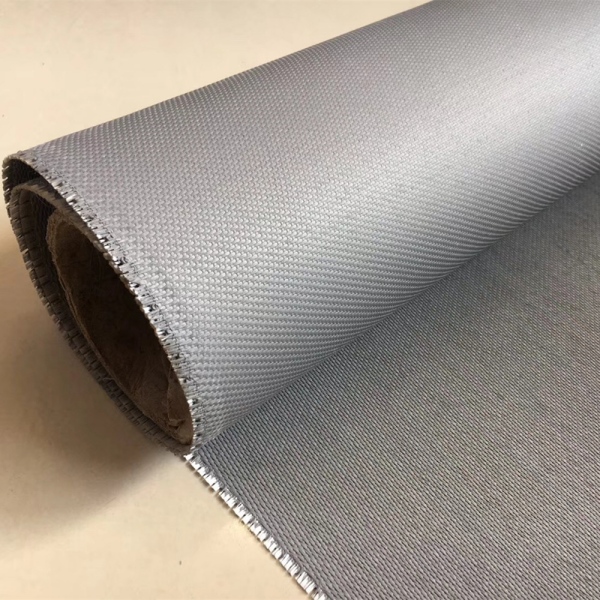
Welding fabric is commonly specified in:
Fabric weight helps identify how much textile material is present per unit area, but it is not a direct temperature rating.
A heavier fabric may provide:
However, heavier does not necessarily mean better.
A 1900 g/m² vermiculite coated fiberglass roll and an 18 oz silica fabric represent completely different material systems. Comparing only their weight would not provide a meaningful thermal comparison.
This is particularly important when comparing coated fabrics.
A supplier may quote:
These numbers are not interchangeable.
For example, two 800 g/m² finished coated fabrics can contain different fiberglass weights and different quantities of coating.
For repeat OEM orders, specify whether the required GSM refers to the base fabric or the complete finished coated textile.
Weight and thickness should be controlled as separate values.
Within the current BSTFLEX roll range, thickness already varies significantly:
| Material Family | Current Typical Thickness Range |
|---|---|
| Heat-Cleaned Fiberglass Roll | Approx. 0.43 mm for the currently listed construction |
| Acrylic Coated Fiberglass Roll | Approx. 0.45–0.90 mm |
| Vermiculite Coated Fiberglass Roll | Approx. 0.8–3.0 mm |
| Silica Finished Blanket Constructions | Approx. 0.030 or 0.060 in |
Thickness affects flexibility, finished weight, sewing requirements, thermal separation and ease of handling.
The thickest material should not automatically become the default specification.
Roll width is one of the most important commercial specifications for converters.
It affects material yield and therefore the real cost of every finished welding blanket.
For example, current BSTFLEX heat-cleaned fiberglass roll formats include widths of approximately:
Acrylic coated constructions are also available in different widths depending on thickness and fabric structure, while the current vermiculite coated range is typically around 1.0 m wide.
The widest roll is not automatically the most economical roll.
Before ordering, calculate:
Large finished blankets can be made from multiple joined fabric panels.
Therefore, distinguish between:
| Term | Meaning |
|---|---|
| Roll Width | Usable width of the raw textile |
| Panel Width | Width after cutting the raw roll |
| Finished Blanket Width | Final dimension after joining, sewing and edge finishing |
A 6 ft, 8 ft or 10 ft finished welding blanket does not necessarily require raw textile of the same width.
Current BSTFLEX fiberglass roll products include typical lengths around 45 m or 50 m, while the vermiculite coated fiberglass range is commonly supplied around 50 m.
Roll length should be selected according to:
Longer rolls can reduce material changeovers, but they can also become heavier and less convenient to handle.
| Surface | Primary Purchasing Reason |
|---|---|
| Heat-Cleaned / Uncoated | Economical general welding protection |
| Acrylic Coated | Surface stability and abrasion resistance |
| Silicone Coated | Durable coated surface, moisture resistance and repeated handling |
| Vermiculite Treated | Mineral-treated surface for more demanding hot-work exposure |
| Aluminized | Radiant heat reflection |
Coating should not be treated as a generic performance upgrade.
Each surface treatment solves a different problem.
Single-side and double-side coatings are different constructions.
A single-side coated material can be appropriate when:
A double-side coating can be useful when:
Always specify coating sides in an OEM RFQ when they matter to the finished product.
A welding blanket roll does not have one meaningful temperature number unless the exposure conditions are also defined.
Ask whether the published value refers to:
This becomes especially important with coated and laminated materials.
For example, the existing aluminized fiberglass finished blanket uses different temperature references for its aluminum foil side and fiberglass side. Applying the fiberglass-side value to the reflective laminate as a whole would be misleading.
A welding blanket may survive hot particles without immediately failing while still allowing significant heat to reach the protected side.
This distinction matters when protecting:
Material survival and protection of the substrate are not the same performance requirement.
Where backside temperature is critical, provide information about the protected component and allowable temperature rise.
BSTFLEX roll materials can support several purchasing routes.
| Supply Format | Best For |
|---|---|
| Full Roll | Converters and distributors with their own cutting and sewing capability |
| Cut-to-Length Roll Material | Buyers needing controlled continuous lengths |
| Cut Panels | Companies that perform their own final sewing or assembly |
| Finished Welding Blanket | Buyers that need a ready-to-use completed product |
Full roll purchasing gives the buyer maximum control over material conversion. Finished fabrication transfers more responsibility for dimensions, seams, edge treatment and hardware to the manufacturer.
Unless specifically ordered, a welding blanket roll normally does not include:
These belong to the final fabricated blanket specification.
Comparing only the price per roll can produce a misleading purchasing decision.
Two rolls with the same selling price may have completely different:
A better comparison includes:
| Specification | Why It Matters |
|---|---|
| Base Material | Defines the main thermal textile system |
| Fabric Construction | Influences flexibility, strength and handling |
| Fabric Weight | Defines material mass per area |
| Thickness | Affects bulk, flexibility and thermal separation |
| Coating | Changes surface behavior |
| Coating Sides | Changes construction, weight and handling |
| Usable Width | Controls cutting yield |
| Roll Length | Controls total supplied area |
| Total Area | Allows normalized cost comparison |
| Application Limits | Determines whether the material suits the real hot-work environment |
For a simple rectangular roll:
Nominal Area = Usable Width × Roll Length
However, finished yield is lower after allowance for:
For high-volume conversion, a cutting plan should be prepared before selecting the final roll width.
| Your Requirement | BSTFLEX Starting Point |
|---|---|
| General economical fiberglass roll | Heat Cleaned Fiberglass Welding Blanket Roll |
| Coated fiberglass with better handling durability | Acrylic Coated Fiberglass Welding Blanket Roll |
| Heavier mineral-treated fiberglass for demanding hot work | Vermiculite Coated Fiberglass Welding Blanket Roll |
| Other coated fiberglass, silica or specialty roll material | Welding Blanket Rolls & Roll Goods |
Roll goods are not automatically the most economical solution for every buyer.
Choose finished blankets when:
The BSTFLEX Welding & Soldering Area Protection range includes finished fiberglass, coated fiberglass, silica, aluminized and carbon felt welding protection products in addition to roll goods.
Buyers that do not require roll material can select from several finished-product constructions.
The Acrylic Coated Fiberglass Welding Blanket is designed for general welding, cutting and hot-work protection where improved surface durability is required.
The Silicone Coated Fiberglass Welding Blanket provides a coated fiberglass option for repeated industrial handling and equipment protection.
The Silica Fabric Welding Blanket provides higher-temperature woven textile options using 70% or 96% silica fabric.
The Silicone Coated Silica Welding Blanket combines a silica textile substrate with a coated surface for demanding industrial conditions.
The Aluminized Fiberglass Welding Blanket should be evaluated where radiant heat reflection is the dominant requirement.
The Carbon Fiber Felt Welding Blanket provides a soft and conformable alternative for localized thermal protection and irregular components.
| RFQ Item | What to Specify |
|---|---|
| Hot-Work Process | Welding, grinding, cutting, brazing or other process |
| Exposure | Sparks, spatter, slag, radiant heat, direct contact or combination |
| Orientation | Horizontal, vertical, curtain or wrapped |
| Continuous Temperature | Normal operating exposure where known |
| Peak Temperature | Maximum short-duration exposure where known |
| Material | Fiberglass, coated fiberglass, silica or request for recommendation |
| Fabric Weight | Required g/m² or oz/yd² if specified |
| Thickness | Required thickness or acceptable range |
| Coating | Uncoated, acrylic, silicone, vermiculite, aluminized or other |
| Coating Sides | One side or both sides where applicable |
| Roll Width | Required usable width |
| Roll Length | Required continuous length |
| Quantity | Number of rolls or total required area |
| Supply Format | Full roll, cut length, panel or finished blanket |
| OEM Requirements | Labels, packaging, private label or repeat-production requirements |
A distributor does not necessarily need to stock every possible welding fabric construction.
A practical inventory can cover several clear purchasing positions:
This structure allows the distributor to serve both local converters purchasing roll goods and industrial end users purchasing finished welding blankets.
Converters should place material yield near the top of the purchasing decision.
Before approving a roll size, calculate:
The cheapest price per square meter is not always the lowest finished-product cost if the roll width creates excessive waste.
Repeat production requires a controlled technical specification.
Do not rely only on a generic description such as "fiberglass welding fabric."
An approved OEM specification should identify:
This makes repeat orders easier to control and reduces the risk of substitution with technically different materials carrying a similar generic name.
There is no single best roll for every application. Heat-cleaned fiberglass is a practical starting point for economical general welding protection. Acrylic coated fiberglass improves handling durability. Vermiculite coated fiberglass is available in heavier mineral-treated constructions for more demanding hot work. Silica is considered when higher thermal capability is required, while aluminized material is primarily selected for radiant heat reflection.
The terms often describe similar continuous protective textiles. "Welding blanket roll" emphasizes the intended welding-protection application, while "welding fabric roll" describes the material before it is converted into a blanket, curtain or protective panel.
Width depends on the material. Current heat-cleaned fiberglass constructions include approximately 1.0 m, 1.5 m and 1.8 m options. Acrylic coated fiberglass is also available in several widths depending on construction. Current vermiculite coated fiberglass is typically approximately 1.0 m wide. Other materials should be confirmed against the exact specification.
Current fiberglass roll products commonly include approximately 45 m and 50 m lengths. Vermiculite coated fiberglass is typically supplied in approximately 50 m rolls. Custom requirements can be reviewed according to material and production capability.
No. Higher weight can increase physical mass and durability, but material chemistry, thickness, weave, coating and actual exposure conditions are also important. Different material families should not be compared by GSM alone.
No. Thickness can influence thermal separation and mechanical durability, but maximum service temperature is primarily related to the material system and complete construction.
Not automatically. Acrylic coating is primarily used to change surface stability, handling and abrasion characteristics. The temperature capability of the coating and base fiberglass should be evaluated separately.
Vermiculite coated fiberglass should be evaluated for more demanding welding and hot-work applications where a mineral-treated surface, higher thermal exposure and improved abrasion performance are important.
Silica should be considered when the required sustained thermal capability is beyond that normally addressed by conventional fiberglass welding materials. Silica grade, fabric weight and thickness still need to be specified.
Aluminized material should be considered when radiant heat is the dominant thermal hazard. The reflective surface is intended to reduce absorption of radiant thermal energy rather than simply provide a higher generic temperature rating.
Yes. BSTFLEX can discuss complete rolls, cut-to-length material, cut panels and finished blanket fabrication depending on the selected material and order requirements.
Normally no. Grommets, eyelets, hems, reinforced edges and straps are part of finished blanket fabrication unless specifically included in the order.
Yes. BSTFLEX supports both roll-goods supply and finished welding blanket fabrication, including custom dimensions, edge construction, sewing, optional grommets, OEM labeling and private-label packaging.
Send the hot-work process, spark or spatter conditions, temperature exposure, blanket orientation, preferred material, fabric weight or thickness, roll width, roll length, quantity and whether you require full rolls or finished fabrication.
If you already have a technical specification, send BSTFLEX the material, fabric weight, thickness, coating, usable width, roll length and required quantity.
If the material has not yet been selected, provide the welding or cutting process, normal and peak temperature where known, sparks or spatter severity, installation orientation, handling frequency and the product you intend to manufacture from the roll.
BSTFLEX supports welding blanket roll supply for industrial distributors, converters, welding safety brands and OEM manufacturers, including full rolls, cut-to-length material, panels and finished blanket fabrication.
Start with Welding Blanket Rolls & Roll Goods, or compare the dedicated Heat Cleaned Fiberglass Welding Blanket Roll, Acrylic Coated Fiberglass Welding Blanket Roll and Vermiculite Coated Fiberglass Welding Blanket Roll.

 English
 français
 Deutsch
 русский
 italiano
 español
 português
 Nederlands
 日本語
 한국의
 Türkçe
 Polski
 Tiếng Việt
 slovenský
 Indonesia